 Mushie
Porcini vs Bitter bolete: how to tell them apart
Bitter boletes are not poisonous, but a single one ruins a dish with its bitterness. Look for pink-tinged pores on older bitter boletes and a coarse, dark net all over the stem. Porcini have white to olive-yellow pores and a fine, pale net on the upper stem only.
Side-by-side comparison
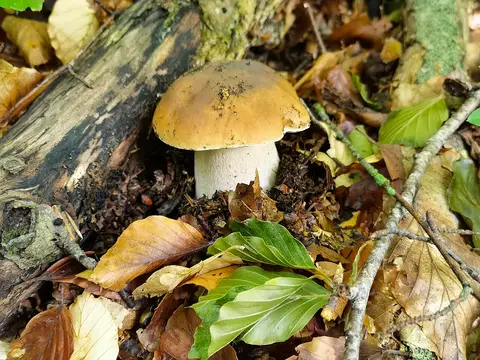 Boletus edulis | 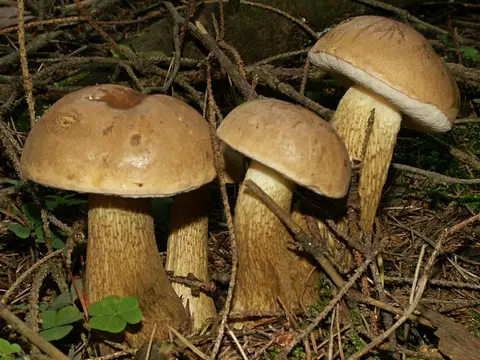 Tylopilus felleus | |
|---|---|---|
| Safety status | Edible (expert ID) | Inedible |
| Cap | Brown to chestnut, 7–25 cm, smooth, slightly sticky when wet | Tan to brown, 5–15 cm, dry and velvety |
| Underside | Sponge-like pores: white when young, yellowish-olive when mature, never red | Pores white when young, turning dirty pink with age |
| Stem | Swollen and barrel-shaped, white to pale brown with a fine white net pattern near the top | Brown with a coarse, dark brown net over the whole stem |
| Smell | Pleasant, nutty | Mild |
| Spore print | Olive-brown | Pinkish-brown |
| Habitat | Spruce, pine, beech, oak and birch woods | Acid soils under conifers, sometimes beech and oak |
| Season | Jun – Nov | Jul – Oct |
Photos: ReddishClover, CC BY-SA 4.0 · bernd gliwa, CC BY-SA 2.5


Quick tests that separate them
- Pores: dirty pink in age (bitter bolete) vs white then olive-yellow (porcini).
- Stem net: dark and coarse (bitter bolete) vs fine and white at the top (porcini).
- Cap texture: velvety dry (bitter bolete) vs smooth and slightly sticky (porcini).
- Tasting wild mushrooms to identify them is not recommended.
Key clues for each
Porcini: White net pattern on the upper stem, pores that never stain red and never turn blue when cut, and a mild nutty smell.
Bitter bolete: Pink pores in older specimens and a dark, coarse net on the stem (porcini have pale pores and a fine white net).
Frequently asked questions
How can I tell porcini from bitter bolete?
Bitter boletes are not poisonous, but a single one ruins a dish with its bitterness. Look for pink-tinged pores on older bitter boletes and a coarse, dark net all over the stem. Porcini have white to olive-yellow pores and a fine, pale net on the upper stem only.
Is either porcini or bitter bolete poisonous?
Neither is classed as poisonous, but Bitter bolete is inedible. Not poisonous, but extremely bitter. A single mushroom can ruin a whole dish.
Is it safe to identify mushrooms from photos or a website?
Never eat a wild mushroom based on an app or a website. Confirm identification and edibility in person with a qualified local expert.
Compare in the field
Photograph your find with Mushie to see possible matches and the look-alikes to rule out. Results are suggestions, never a safe-to-eat verdict.