 Mushie
Porcini (Boletus edulis)
Edible (expert ID)
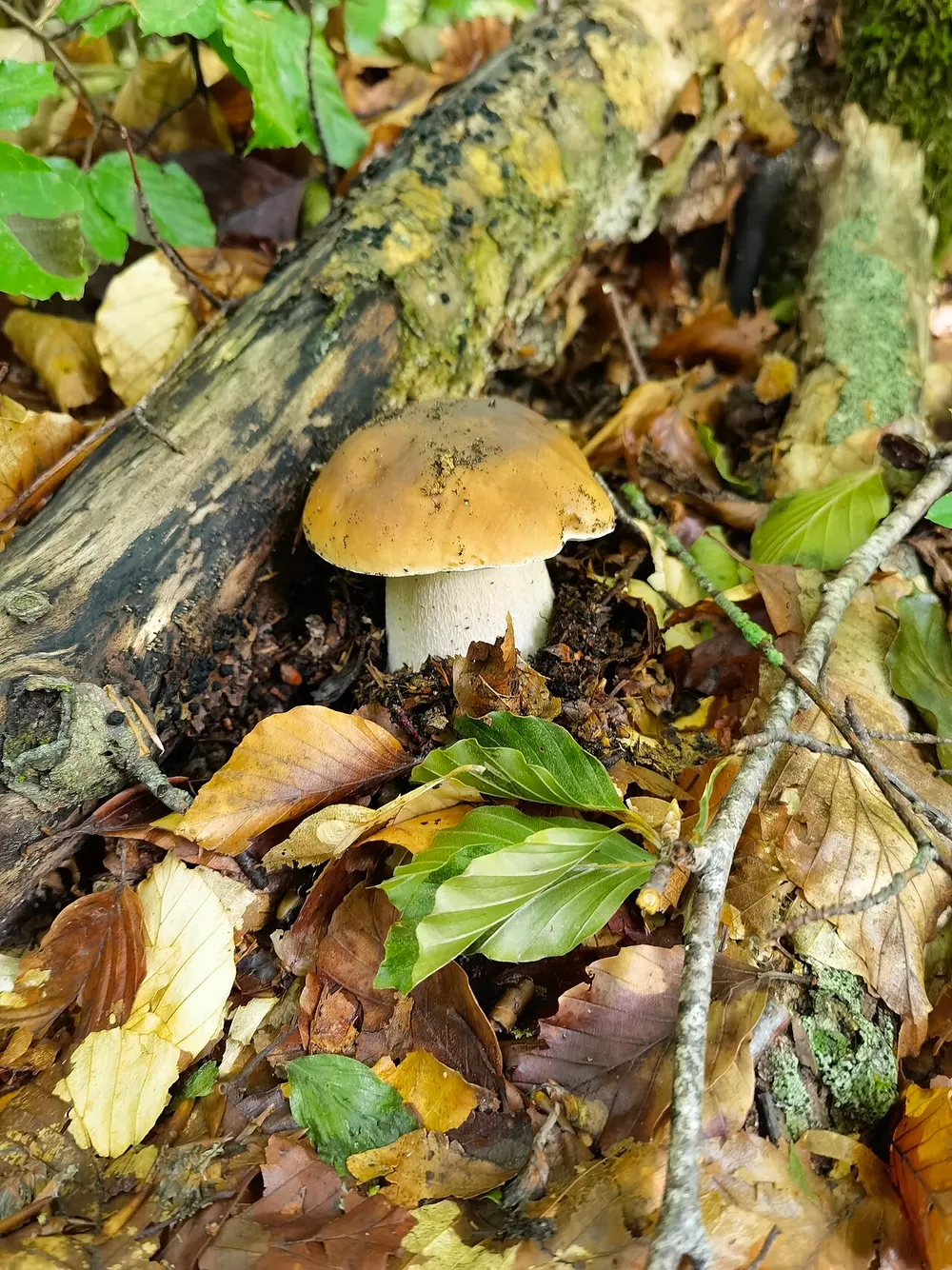
Porcini (penny bun) is a chunky brown-capped bolete with white to olive pores and a swollen, netted stem. Its main lookalike is the very bitter bolete.
| Scientific name | Boletus edulis |
|---|---|
| Other names | Steinpilz · Cèpe de Bordeaux · Penny bun · Porcino · Hongo calabaza |
| Family | Boletaceae |
| Season | Jun – Nov |
| Habitat | Spruce, pine, beech, oak and birch woods |
| Range | Europe and North America |
| Spore print | Olive-brown |
| Smell | Pleasant, nutty |
How to identify Porcini
| Cap | Brown to chestnut, 7–25 cm, smooth, slightly sticky when wet |
|---|---|
| Underside | Sponge-like pores: white when young, yellowish-olive when mature, never red |
| Stem | Swollen and barrel-shaped, white to pale brown with a fine white net pattern near the top |
| Smell | Pleasant, nutty |
| Spore print | Olive-brown |
Is Porcini edible or poisonous?
Edible (expert ID). Regarded as one of the best edible mushrooms when correctly identified and properly cooked.
Porcini look-alikes
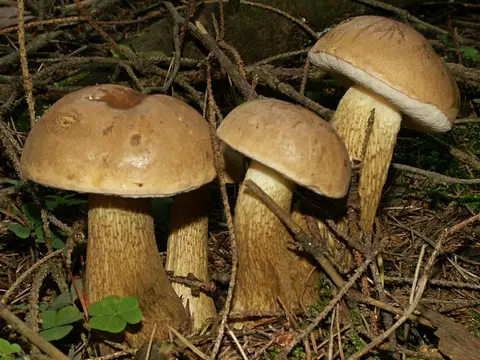
Bitter bolete (inedible) has pink-tinged pores and a dark net on the stem. Boletes with red pores or flesh that stains blue quickly need expert identification.

When does Porcini grow?
Porcini is typically found Jun – Nov in spruce, pine, beech, oak and birch woods. See other mushrooms in season:
Frequently asked questions
Is Porcini edible?
Porcini (Boletus edulis) is regarded as edible by field guides when it has been correctly identified and properly cooked. Regarded as one of the best edible mushrooms when correctly identified and properly cooked. Never eat a wild mushroom based on an app or a website. Confirm identification and edibility in person with a qualified local expert.
What does Porcini look like?
Brown to chestnut, 7–25 cm, smooth, slightly sticky when wet. Underside: sponge-like pores: white when young, yellowish-olive when mature, never red. Stem: swollen and barrel-shaped, white to pale brown with a fine white net pattern near the top.
What are the look-alikes of Porcini?
The main look-alike is Bitter bolete (Tylopilus felleus). Bitter bolete (inedible) has pink-tinged pores and a dark net on the stem. Boletes with red pores or flesh that stains blue quickly need expert identification.
When and where does Porcini grow?
Porcini is usually found from Jun to Nov. Habitat: spruce, pine, beech, oak and birch woods. Range: Europe and North America.
Found something like porcini?
Photograph it with Mushie for possible matches, look-alike warnings and an AI guide for follow-up questions. Results are suggestions, never a safe-to-eat verdict.
Related species
Sources and credits: written from standard field-guide references. Further reading: Wikipedia: Boletus edulis. Last updated 2026-10-22. Editorial policy.