 Mushie
Bitter bolete (Tylopilus felleus)
Inedible
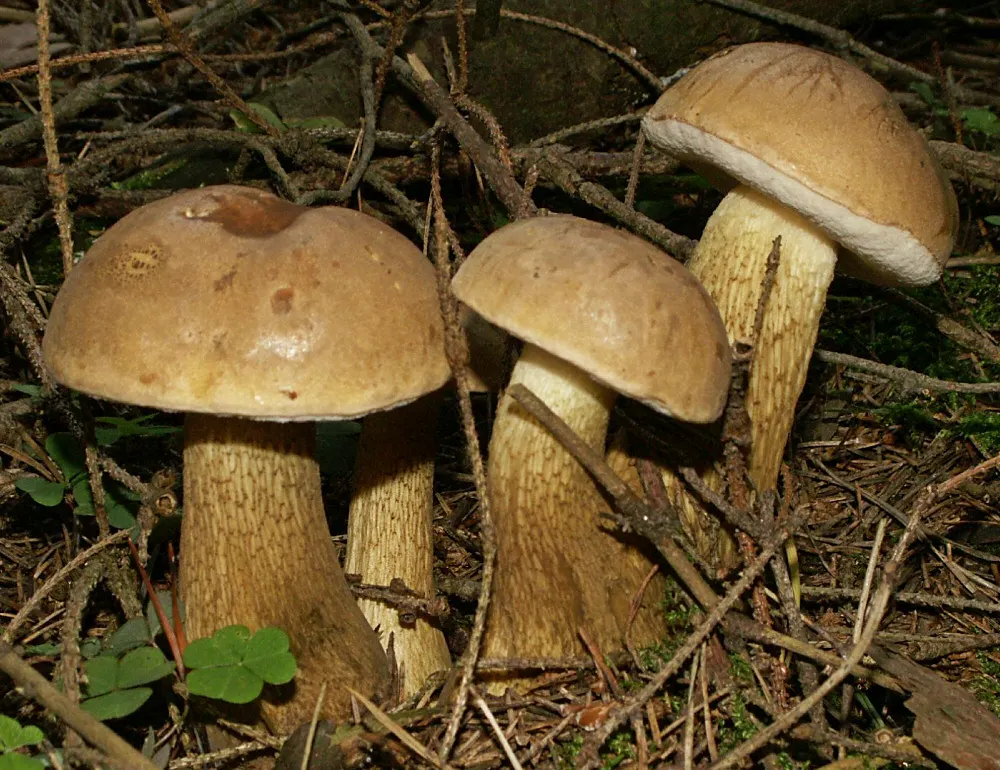
The bitter bolete looks like a porcini but has pink-tinged pores and a dark net on the stem. It is inedible because it is intensely bitter.
| Scientific name | Tylopilus felleus |
|---|---|
| Other names | Gallenröhrling · Bolet amer · Porcino amaro |
| Family | Boletaceae |
| Season | Jul – Oct |
| Habitat | Acid soils under conifers, sometimes beech and oak |
| Range | Europe and North America |
| Spore print | Pinkish-brown |
| Smell | Mild |
How to identify Bitter bolete
| Cap | Tan to brown, 5–15 cm, dry and velvety |
|---|---|
| Underside | Pores white when young, turning dirty pink with age |
| Stem | Brown with a coarse, dark brown net over the whole stem |
| Smell | Mild |
| Spore print | Pinkish-brown |
Is Bitter bolete edible or poisonous?
Inedible. Not poisonous, but extremely bitter. A single mushroom can ruin a whole dish.
Bitter bolete look-alikes
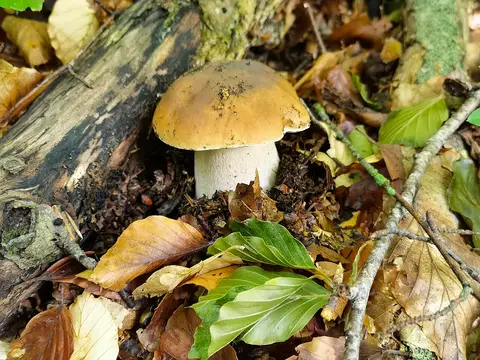
Porcini have olive-yellow pores in age and a fine, pale net. Tasting wild mushrooms to identify them is not a safe method.

When does Bitter bolete grow?
Bitter bolete is typically found Jul – Oct in acid soils under conifers, sometimes beech and oak. See other mushrooms in season:
Frequently asked questions
Is Bitter bolete edible?
Bitter bolete (Tylopilus felleus) is considered inedible. Not poisonous, but extremely bitter. A single mushroom can ruin a whole dish. It is not worth eating.
What does Bitter bolete look like?
Tan to brown, 5–15 cm, dry and velvety. Underside: pores white when young, turning dirty pink with age. Stem: brown with a coarse, dark brown net over the whole stem.
What are the look-alikes of Bitter bolete?
The main look-alike is Porcini (Boletus edulis). Porcini have olive-yellow pores in age and a fine, pale net. Tasting wild mushrooms to identify them is not a safe method.
When and where does Bitter bolete grow?
Bitter bolete is usually found from Jul to Oct. Habitat: acid soils under conifers, sometimes beech and oak. Range: Europe and North America.
Found something like bitter bolete?
Photograph it with Mushie for possible matches, look-alike warnings and an AI guide for follow-up questions. Results are suggestions, never a safe-to-eat verdict.
Related species
Sources and credits: written from standard field-guide references. Further reading: Wikipedia: Tylopilus felleus. Last updated 2026-10-22. Editorial policy.