 Mushie
False morel (Gyromitra esculenta)
Deadly
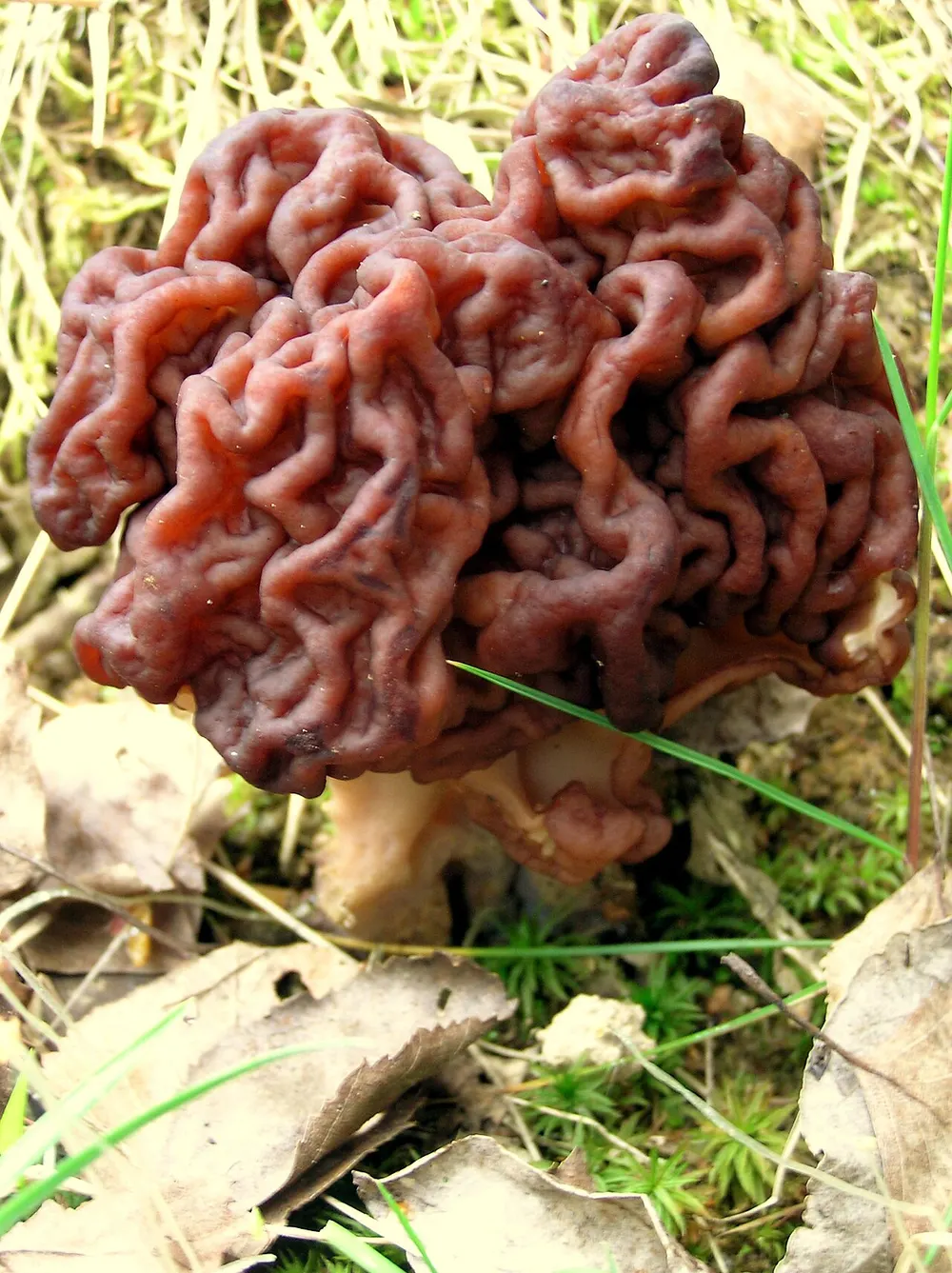
The false morel has a wrinkled, brain-like reddish-brown cap. It can be fatal and is the main lookalike for true morels.
| Scientific name | Gyromitra esculenta |
|---|---|
| Other names | Frühjahrslorchel · Gyromitre comestible · Spugnola bastarda |
| Family | Discinaceae |
| Season | Mar – Jun |
| Habitat | Sandy soils in conifer woods |
| Range | Northern Europe and North America |
| Spore print | Pale yellowish |
| Smell | Mild, fruity |
How to identify False morel
| Cap | Reddish to dark brown, 3–10 cm, irregularly lobed and wrinkled like a brain |
|---|---|
| Underside | No gills: folded, lobed surface |
| Stem | Pale, thick, chambered or irregularly hollow |
| Smell | Mild, fruity |
| Spore print | Pale yellowish |
Is False morel edible or poisonous?
Deadly. Contains gyromitrin, which the body converts into a rocket-fuel-like toxin (monomethylhydrazine). Poisonings and deaths have occurred, even after parboiling.
False morel look-alikes
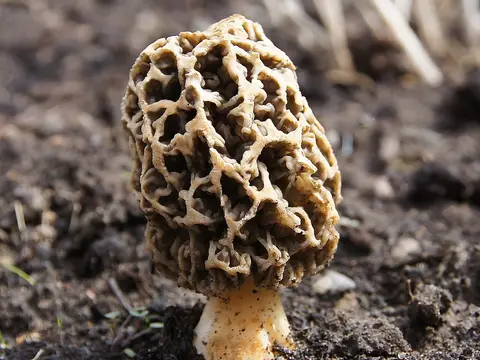
True morels have honeycomb pits and are one single hollow from cap to stem.

When does False morel grow?
False morel is typically found Mar – Jun in sandy soils in conifer woods. See other mushrooms in season:
Frequently asked questions
Is False morel edible?
No. False morel (Gyromitra esculenta) is deadly poisonous. Contains gyromitrin, which the body converts into a rocket-fuel-like toxin (monomethylhydrazine). Poisonings and deaths have occurred, even after parboiling. Never eat it, and call emergency services or a poison centre if you think someone has.
What does False morel look like?
Reddish to dark brown, 3–10 cm, irregularly lobed and wrinkled like a brain. Underside: no gills: folded, lobed surface. Stem: pale, thick, chambered or irregularly hollow.
What are the look-alikes of False morel?
The main look-alike is Morel (Morchella esculenta). True morels have honeycomb pits and are one single hollow from cap to stem.
When and where does False morel grow?
False morel is usually found from Mar to Jun. Habitat: sandy soils in conifer woods. Range: Northern Europe and North America.
Found something like false morel?
Photograph it with Mushie for possible matches, look-alike warnings and an AI guide for follow-up questions. Results are suggestions, never a safe-to-eat verdict.
Related species
Sources and credits: written from standard field-guide references. Further reading: Wikipedia: Gyromitra esculenta. Last updated 2026-10-22. Editorial policy.