 Mushie
Morel (Morchella esculenta)
Edible with caution
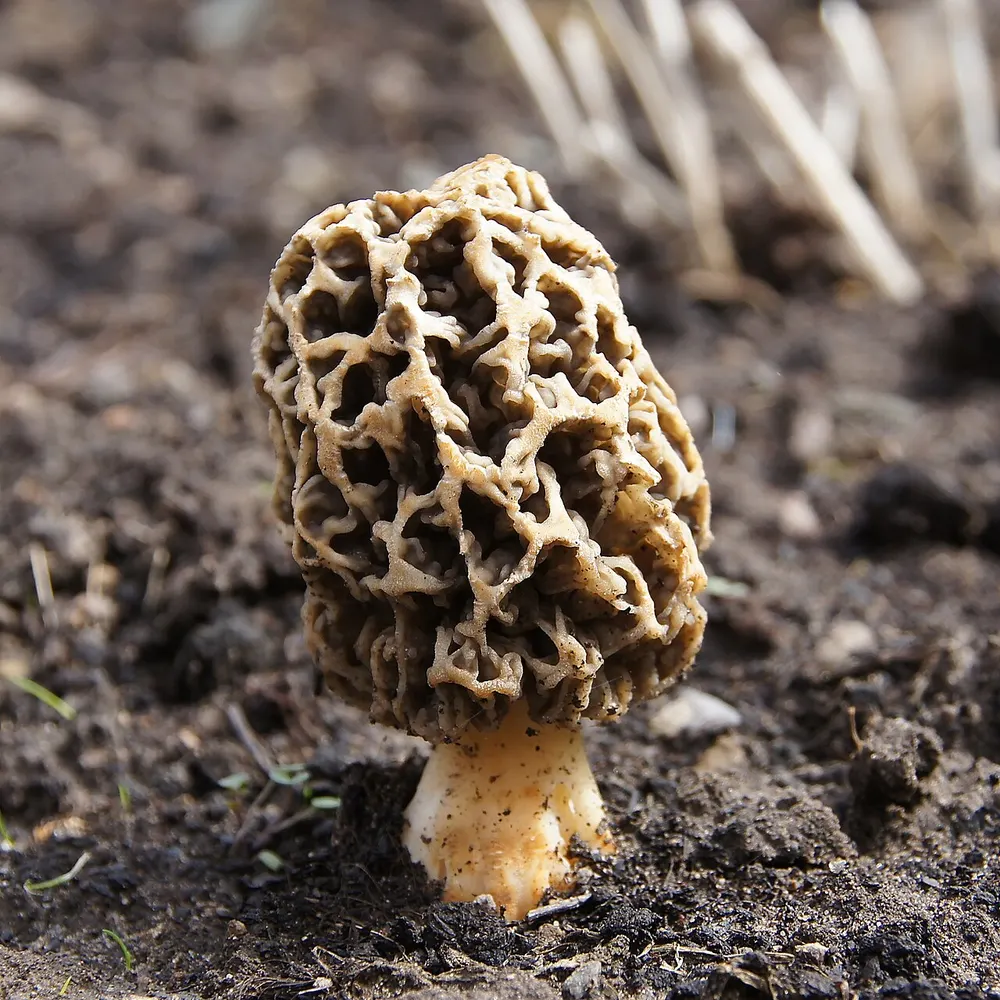
True morels have a honeycomb-pitted cap that is completely hollow when cut lengthwise. They are only safe when thoroughly cooked and are confused with deadly false morels.
| Scientific name | Morchella esculenta |
|---|---|
| Other names | Speisemorchel · Morille · Spugnola · Colmenilla |
| Family | Morchellaceae |
| Season | Mar – May |
| Habitat | Orchards, ash and elm woods, disturbed ground and burn sites |
| Range | Europe, North America and Asia |
| Spore print | Pale cream to yellow |
| Smell | Earthy, mild |
How to identify Morel
| Cap | Tan to yellow-brown, 3–8 cm, conical to egg-shaped with deep pits and ridges |
|---|---|
| Underside | No gills: pitted honeycomb surface; the cap is attached to the stem at its base |
| Stem | Whitish to cream, hollow, continuous with the cap |
| Smell | Earthy, mild |
| Spore print | Pale cream to yellow |
Is Morel edible or poisonous?
Edible with caution. Edible only when thoroughly cooked; toxic raw. Never eat with alcohol on a first try. Hollow-stemmed true morels are often confused with deadly false morels.
Morel look-alikes
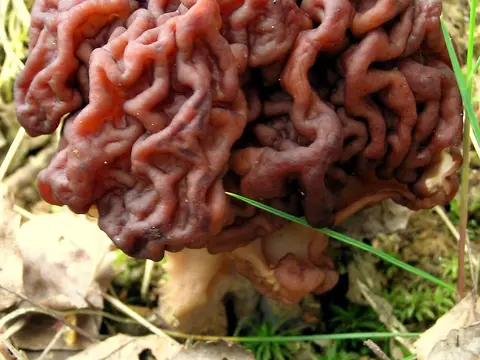
False morels (Gyromitra) have wrinkled, brain-like caps that are cottony or chambered inside.

When does Morel grow?
Morel is typically found Mar – May in orchards, ash and elm woods, disturbed ground and burn sites. See other mushrooms in season:
Frequently asked questions
Is Morel edible?
Morel (Morchella esculenta) is regarded as edible only with caution. Edible only when thoroughly cooked; toxic raw. Never eat with alcohol on a first try. Hollow-stemmed true morels are often confused with deadly false morels. Never eat a wild mushroom based on an app or a website. Confirm identification and edibility in person with a qualified local expert.
What does Morel look like?
Tan to yellow-brown, 3–8 cm, conical to egg-shaped with deep pits and ridges. Underside: no gills: pitted honeycomb surface; the cap is attached to the stem at its base. Stem: whitish to cream, hollow, continuous with the cap.
What are the look-alikes of Morel?
The main look-alike is False morel (Gyromitra esculenta). False morels (Gyromitra) have wrinkled, brain-like caps that are cottony or chambered inside.
When and where does Morel grow?
Morel is usually found from Mar to May. Habitat: orchards, ash and elm woods, disturbed ground and burn sites. Range: Europe, North America and Asia.
Found something like morel?
Photograph it with Mushie for possible matches, look-alike warnings and an AI guide for follow-up questions. Results are suggestions, never a safe-to-eat verdict.
Related species
Sources and credits: written from standard field-guide references. Further reading: Wikipedia: Morchella esculenta. Last updated 2026-10-22. Editorial policy.