 Mushie
Parasol mushroom (Macrolepiota procera)
Edible with caution
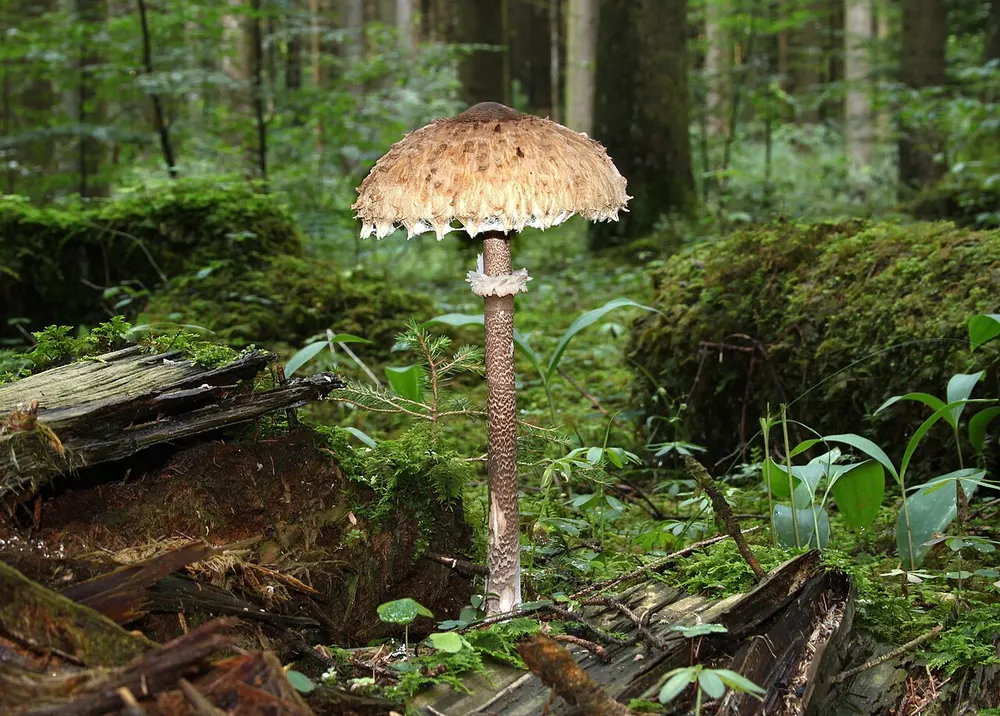
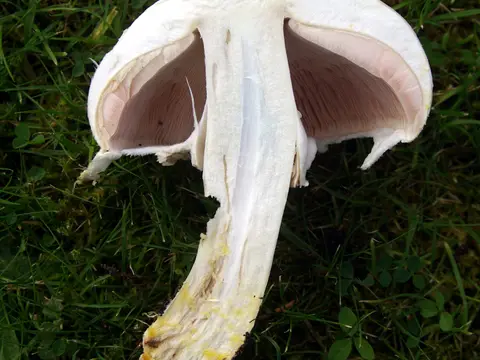
The parasol mushroom is tall, with a shaggy brown-scaled cap and a snake-skin patterned stem and a double ring that slides along it.

| Scientific name | Macrolepiota procera |
|---|---|
| Other names | Riesenschirmling · Coulemelle · Mazza di tamburo |
| Family | Agaricaceae |
| Season | Jul – Nov |
| Habitat | Grassy clearings, woodland edges and pastures |
| Range | Europe, North America and parts of Asia |
| Spore print | White |
| Smell | Pleasant, nutty |
How to identify Parasol mushroom
| Cap | Pale brown with darker shaggy scales, 10–25 cm, egg-shaped when young then flat with a central bump |
|---|---|
| Underside | Crowded white gills not touching the stem |
| Stem | Up to 40 cm, snake-skin pattern, with a thick double ring that can be moved up and down |
| Smell | Pleasant, nutty |
| Spore print | White |
Is Parasol mushroom edible or poisonous?
Edible with caution. Edible (caps only) when correctly identified and cooked. Dangerous small Lepiota species and the toxic green-spored parasol look similar to beginners.
Parasol mushroom look-alikes
Smaller, similar Lepiota species (some deadly) and the green-spored parasol (Chlorophyllum molybdites) of warm regions cause poisonings.
When does Parasol mushroom grow?
Parasol mushroom is typically found Jul – Nov in grassy clearings, woodland edges and pastures. See other mushrooms in season:
Frequently asked questions
Is Parasol mushroom edible?
Parasol mushroom (Macrolepiota procera) is regarded as edible only with caution. Edible (caps only) when correctly identified and cooked. Dangerous small Lepiota species and the toxic green-spored parasol look similar to beginners. Never eat a wild mushroom based on an app or a website. Confirm identification and edibility in person with a qualified local expert.
What does Parasol mushroom look like?
Pale brown with darker shaggy scales, 10–25 cm, egg-shaped when young then flat with a central bump. Underside: crowded white gills not touching the stem. Stem: up to 40 cm, snake-skin pattern, with a thick double ring that can be moved up and down.
What are the look-alikes of Parasol mushroom?
Smaller, similar Lepiota species (some deadly) and the green-spored parasol (Chlorophyllum molybdites) of warm regions cause poisonings.
When and where does Parasol mushroom grow?
Parasol mushroom is usually found from Jul to Nov. Habitat: grassy clearings, woodland edges and pastures. Range: Europe, North America and parts of Asia.
Found something like parasol mushroom?
Photograph it with Mushie for possible matches, look-alike warnings and an AI guide for follow-up questions. Results are suggestions, never a safe-to-eat verdict.
Related species
Sources and credits: written from standard field-guide references. Further reading: Wikipedia: Macrolepiota procera. Last updated 2026-10-22. Editorial policy.