 Mushie
Mushrooms that stain, bruise or bleed latex when cut
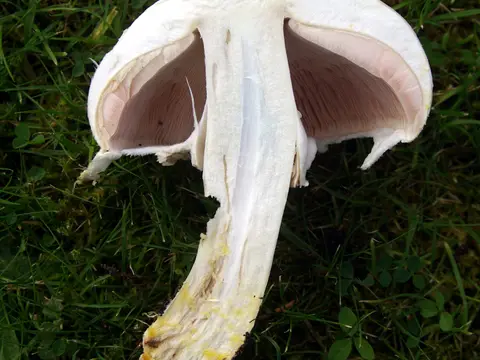
When you slice or scratch fresh mushroom flesh, chemical reactions with oxygen can cause dramatic colour shifts or release milky liquid (latex). These reactions are among the most helpful field clues: instant chrome-yellow staining at the stem base exposes the poisonous yellow stainer, slow pink-red bruising separates the blusher from the panther cap, and vivid blue milk identifies the indigo milk cap.
Key field checks for staining, bruising & bleeding
| Feature / Clue | What it means in the field |
|---|---|
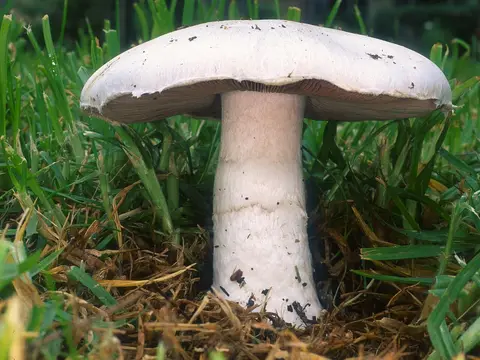
| Chrome-yellow flash at the stem base | Yellow stainer (Agaricus xanthodermus) — turns bright yellow within seconds of scratching the base and smells of phenol or ink. |
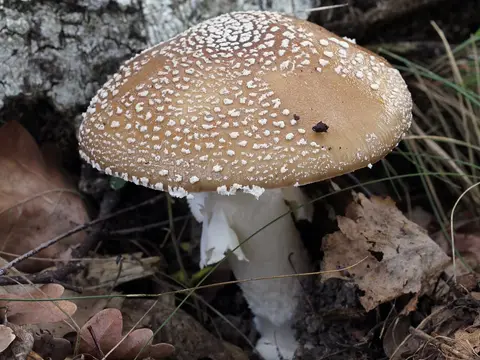
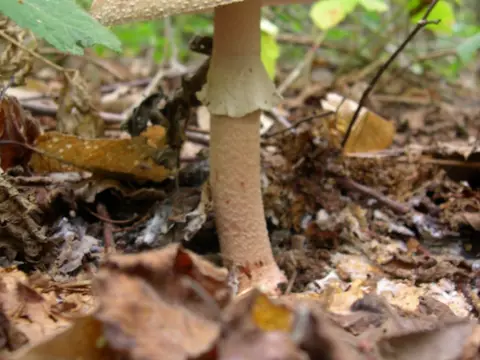
| Slow pink-to-red blushing in cut flesh | The blusher (Amanita rubescens) — flesh and wormholes slowly flush pink-red, unlike the pure white flesh of the poisonous panther cap. |
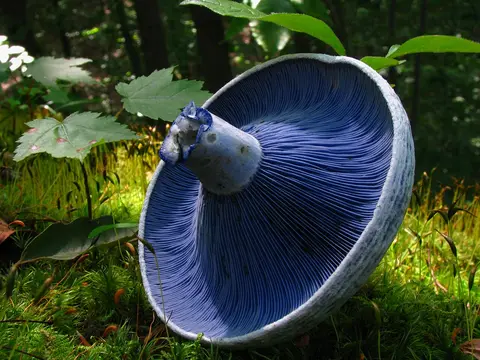
| Deep indigo-blue milky latex | Indigo milk cap (Lactarius indigo) — exudes dark blue milk when sliced that slowly turns greenish in air. |
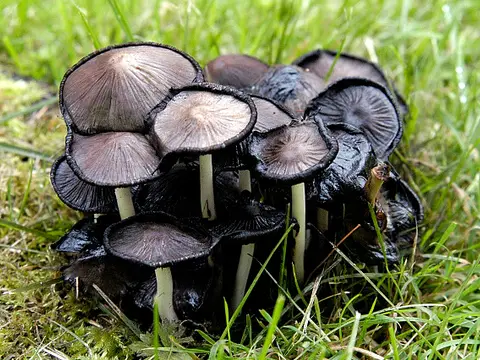
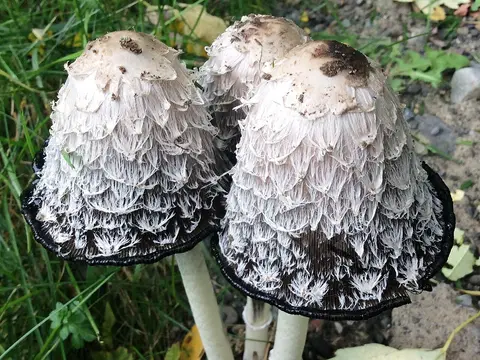
| Gills dissolving into jet-black ink | Shaggy ink cap and common ink cap — auto-digest their own gills into black spore liquid within hours. |
Poisonous species in this group (3)
Edible with caution species in this group (2)
Edible (expert ID) species in this group (2)
Frequently asked questions
Does blue bruising mean a mushroom is psychedelic or poisonous?
No. Several ordinary boletes and milk caps bruise or bleed blue due to harmless organic pigments reacting with air, while the deadliest mushrooms (death cap, destroying angel, funeral bell) do not bruise blue at all.
Where should you scratch a mushroom to test for yellow staining?
Slice or thumbnail-scratch the very bottom of the stem base, where the chrome-yellow colour reaction of Agaricus xanthodermus is strongest.
Not sure what you found?
Photograph it with Mushie for possible matches, look-alike warnings and an AI guide for follow-up questions. Results are suggestions, never a safe-to-eat verdict.