 Mushie
Panther cap (Amanita pantherina)
Poisonous
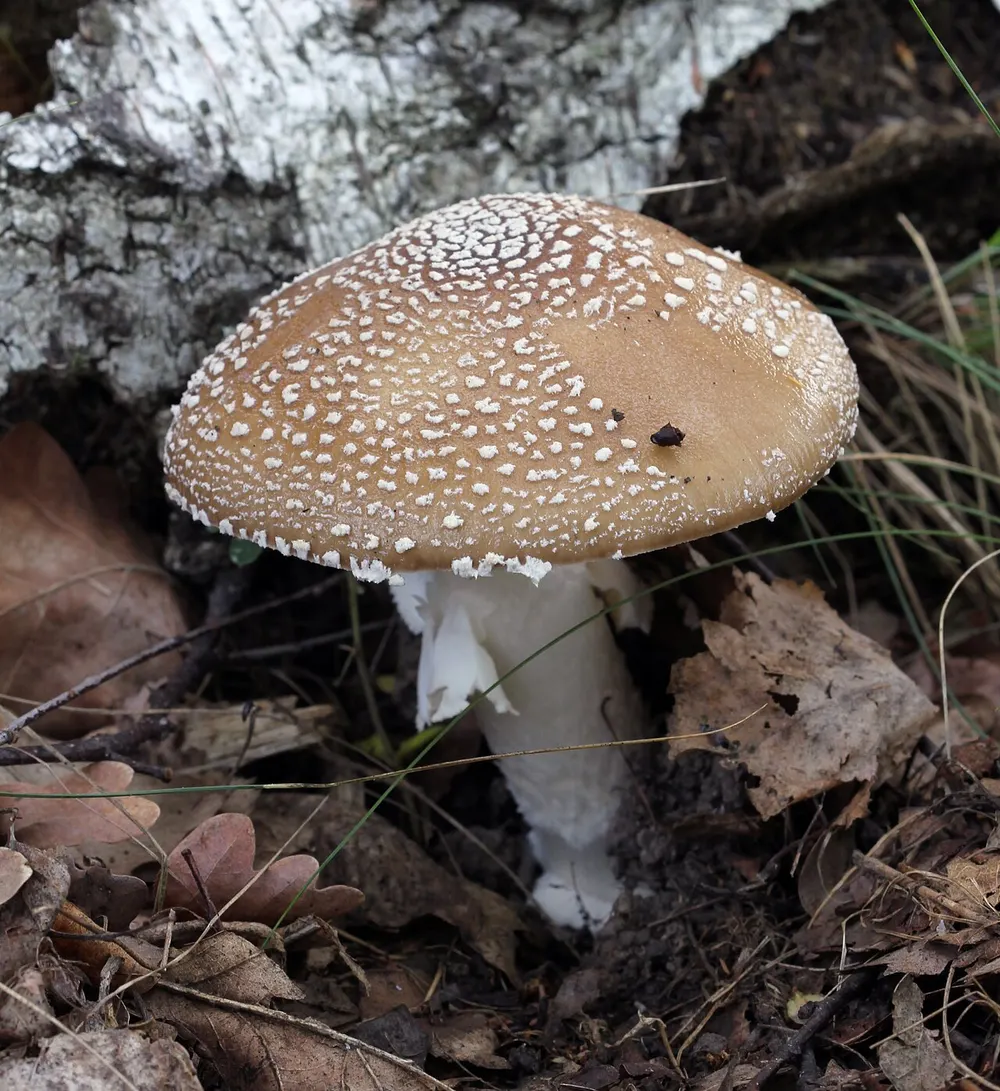
The panther cap is a brown Amanita with white warts. It is poisonous and is often mistaken for the edible-when-cooked blusher.

| Scientific name | Amanita pantherina |
|---|---|
| Other names | Pantherpilz · Amanite panthère |
| Family | Amanitaceae |
| Season | Jul – Oct |
| Habitat | Broadleaf and conifer woods, often on sandy or acid soils |
| Range | Europe, North America and Asia |
| Spore print | White |
| Smell | Slightly of raw radish or none |
How to identify Panther cap
| Cap | Brown to olive-brown, 5–10 cm, with small white warts and a lined margin |
|---|---|
| Underside | White gills, free from the stem |
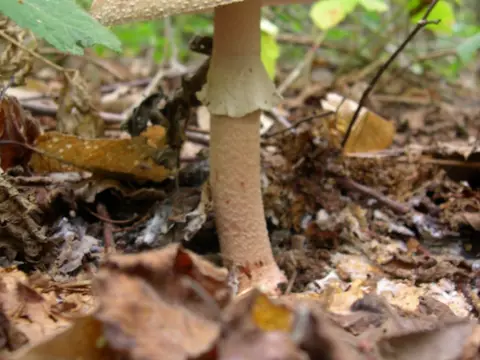
| Stem | White, with a smooth ring and a rolled, sleeve-like collar at the bulbous base |
| Smell | Slightly of raw radish or none |
| Spore print | White |
Is Panther cap edible or poisonous?
Poisonous. Contains ibotenic acid and muscimol, like the fly agaric, usually at higher levels. Poisoning is serious and can require hospital care.
Panther cap look-alikes
The blusher (Amanita rubescens) turns pink or red when cut and has a grooved ring.
When does Panther cap grow?
Panther cap is typically found Jul – Oct in broadleaf and conifer woods, often on sandy or acid soils. See other mushrooms in season:
Frequently asked questions
Is Panther cap edible?
No. Panther cap (Amanita pantherina) is poisonous. Contains ibotenic acid and muscimol, like the fly agaric, usually at higher levels. Poisoning is serious and can require hospital care. Do not eat it.
What does Panther cap look like?
Brown to olive-brown, 5–10 cm, with small white warts and a lined margin. Underside: white gills, free from the stem. Stem: white, with a smooth ring and a rolled, sleeve-like collar at the bulbous base.
What are the look-alikes of Panther cap?
The main look-alike is The blusher (Amanita rubescens). The blusher (Amanita rubescens) turns pink or red when cut and has a grooved ring.
When and where does Panther cap grow?
Panther cap is usually found from Jul to Oct. Habitat: broadleaf and conifer woods, often on sandy or acid soils. Range: Europe, North America and Asia.
Found something like panther cap?
Photograph it with Mushie for possible matches, look-alike warnings and an AI guide for follow-up questions. Results are suggestions, never a safe-to-eat verdict.
Related species
Sources and credits: written from standard field-guide references. Further reading: Wikipedia: Amanita pantherina. Last updated 2026-10-22. Editorial policy.