 Mushie
The blusher (Amanita rubescens)
Edible with caution
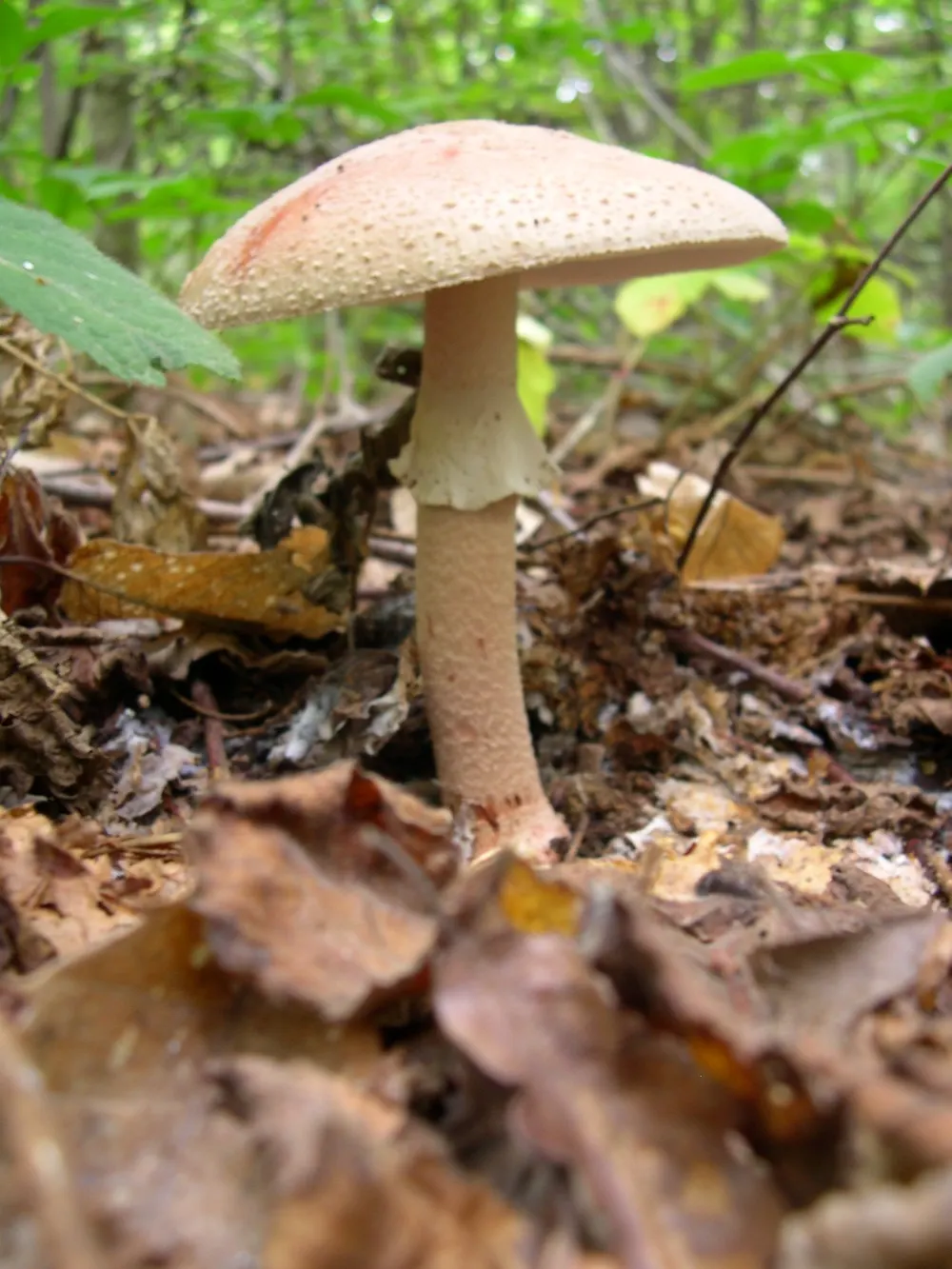
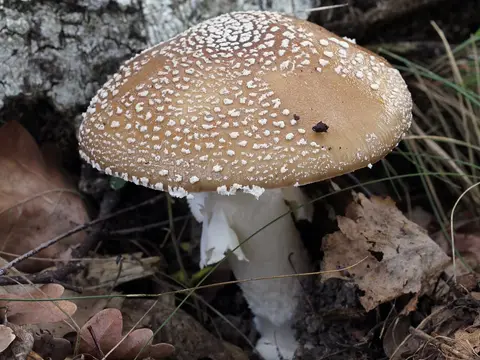
The blusher is a pinkish-brown Amanita whose flesh turns reddish when cut or bruised. It is only safe thoroughly cooked and is easy to confuse with toxic Amanitas.

| Scientific name | Amanita rubescens |
|---|---|
| Other names | Perlpilz · Amanite rougissante · Amanita rubescens |
| Family | Amanitaceae |
| Season | Jun – Nov |
| Habitat | Broadleaf and conifer woods |
| Range | Europe and North America |
| Spore print | White |
| Smell | Mild |
How to identify The blusher
| Cap | Pinkish-brown to reddish-brown, 6–15 cm, covered in greyish to pinkish warts |
|---|---|
| Underside | White gills that develop reddish stains |
| Stem | Pale, with a ring that is finely grooved on the upper surface, bulbous base |
| Smell | Mild |
| Spore print | White |
Is The blusher edible or poisonous?
Edible with caution. Regarded as edible only when thoroughly cooked; raw or undercooked it is poisonous. Many guides advise against it because it is easily confused with the panther cap and other toxic Amanitas.
The blusher look-alikes
The panther cap (poisonous) and other Amanitas look similar. Do not rely on one feature.
When does The blusher grow?
The blusher is typically found Jun – Nov in broadleaf and conifer woods. See other mushrooms in season:
Frequently asked questions
Is The blusher edible?
The blusher (Amanita rubescens) is regarded as edible only with caution. Regarded as edible only when thoroughly cooked; raw or undercooked it is poisonous. Many guides advise against it because it is easily confused with the panther cap and other toxic Amanitas. Never eat a wild mushroom based on an app or a website. Confirm identification and edibility in person with a qualified local expert.
What does The blusher look like?
Pinkish-brown to reddish-brown, 6–15 cm, covered in greyish to pinkish warts. Underside: white gills that develop reddish stains. Stem: pale, with a ring that is finely grooved on the upper surface, bulbous base.
What are the look-alikes of The blusher?
The main look-alike is Panther cap (Amanita pantherina). The panther cap (poisonous) and other Amanitas look similar. Do not rely on one feature.
When and where does The blusher grow?
The blusher is usually found from Jun to Nov. Habitat: broadleaf and conifer woods. Range: Europe and North America.
Found something like the blusher?
Photograph it with Mushie for possible matches, look-alike warnings and an AI guide for follow-up questions. Results are suggestions, never a safe-to-eat verdict.
Related species
Sources and credits: written from standard field-guide references. Further reading: Wikipedia: Amanita rubescens. Last updated 2026-10-22. Editorial policy.