 Mushie
Common earthball (Scleroderma citrinum)
Poisonous
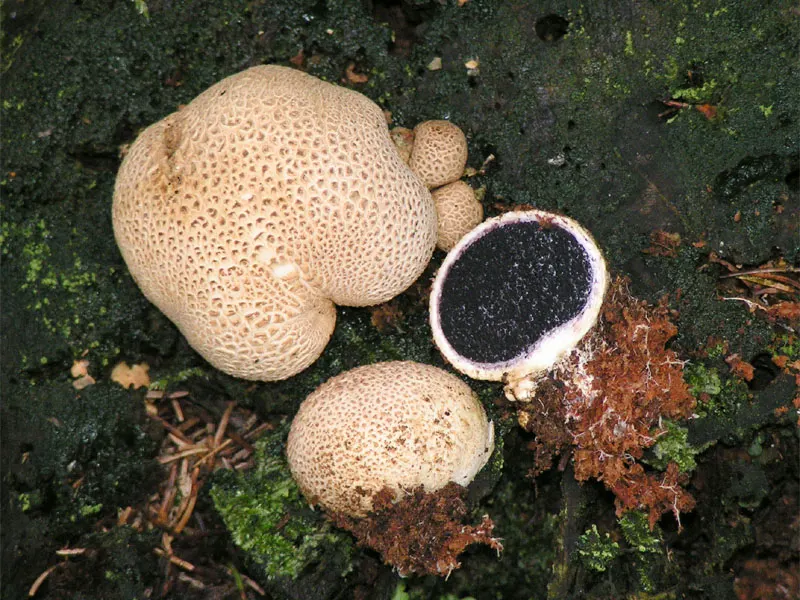
The common earthball looks like a puffball but has a thick, warty yellow-brown skin and a dark, firm interior. It is poisonous.
| Scientific name | Scleroderma citrinum |
|---|---|
| Other names | Dickschaliger Kartoffelbovist · Scléroderme commun |
| Family | Sclerodermataceae |
| Season | Jul – Nov |
| Habitat | Acid soils in woods, heaths and lawns near trees |
| Range | Europe, North America and Asia |
| Spore print | Dark purple-brown |
| Smell | Sharp, rubbery or like raw potato |
How to identify Common earthball
| Cap | Dull yellow to brown, 3–10 cm, thick and scaly or warty skin |
|---|---|
| Underside | No gills |
| Stem | Almost none, or a short, rooting base |
| Smell | Sharp, rubbery or like raw potato |
| Spore print | Dark purple-brown |
Is Common earthball edible or poisonous?
Poisonous. Causes gastrointestinal upset. Sometimes mistaken for puffballs, truffles or young Amanitas.
Common earthball look-alikes
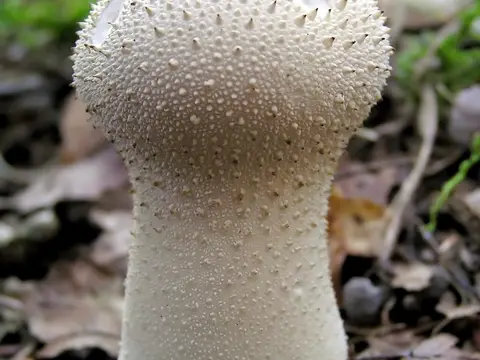
A young puffball is pure white inside with a thin skin.

When does Common earthball grow?
Common earthball is typically found Jul – Nov in acid soils in woods, heaths and lawns near trees. See other mushrooms in season:
Frequently asked questions
Is Common earthball edible?
No. Common earthball (Scleroderma citrinum) is poisonous. Causes gastrointestinal upset. Sometimes mistaken for puffballs, truffles or young Amanitas. Do not eat it.
What does Common earthball look like?
Dull yellow to brown, 3–10 cm, thick and scaly or warty skin. Underside: no gills. Stem: almost none, or a short, rooting base.
What are the look-alikes of Common earthball?
The main look-alike is Common puffball (Lycoperdon perlatum). A young puffball is pure white inside with a thin skin.
When and where does Common earthball grow?
Common earthball is usually found from Jul to Nov. Habitat: acid soils in woods, heaths and lawns near trees. Range: Europe, North America and Asia.
Found something like common earthball?
Photograph it with Mushie for possible matches, look-alike warnings and an AI guide for follow-up questions. Results are suggestions, never a safe-to-eat verdict.
Related species
Sources and credits: written from standard field-guide references. Further reading: Wikipedia: Scleroderma citrinum. Last updated 2026-10-22. Editorial policy.