 Mushie
False chanterelle (Hygrophoropsis aurantiaca)
Inedible
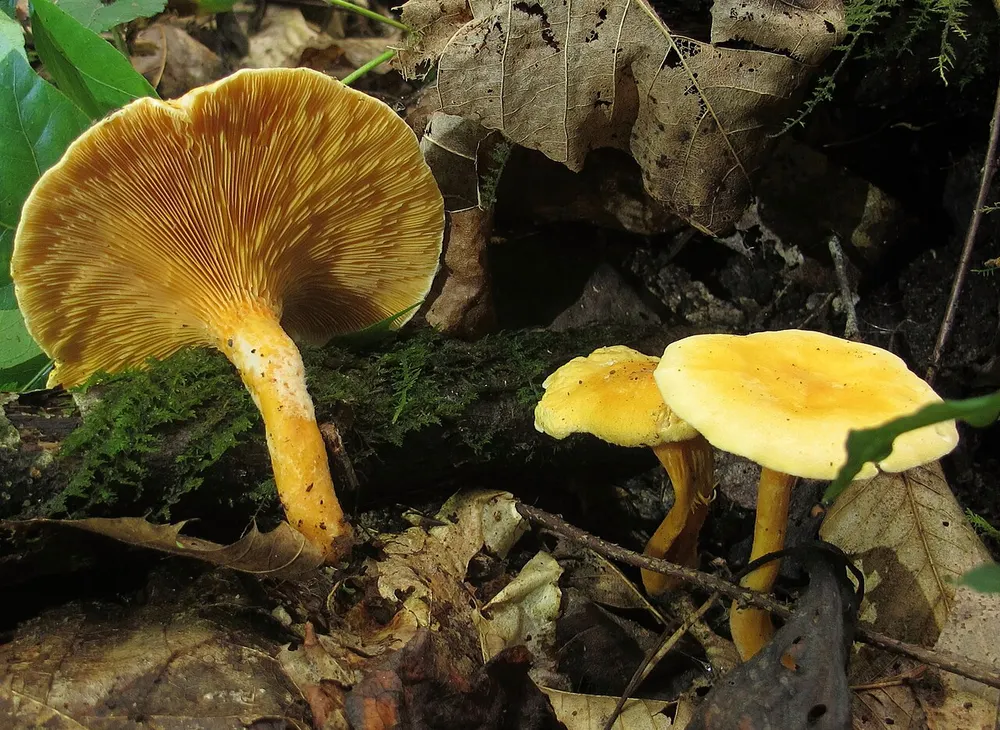
The false chanterelle is an orange mushroom with thin, forking gills. It is considered inedible and is a common beginner's mistake for the true chanterelle.
| Scientific name | Hygrophoropsis aurantiaca |
|---|---|
| Other names | Falscher Pfifferling · Fausse girolle · Finferlo falso |
| Family | Hygrophoropsidaceae |
| Season | Aug – Nov |
| Habitat | Conifer woods, heaths and needle litter |
| Range | Europe and North America |
| Spore print | White |
| Smell | Mild, slightly mushroomy |
How to identify False chanterelle
| Cap | Orange, darker and brownish in the centre, 2–8 cm, with an inrolled margin |
|---|---|
| Underside | Thin, crowded, true gills that fork repeatedly and are deeper orange than the cap |
| Stem | Orange-brown, thin, often hollow with age |
| Smell | Mild, slightly mushroomy |
| Spore print | White |
Is False chanterelle edible or poisonous?
Inedible. Bland and sometimes causes digestive upset. Not recommended.
False chanterelle look-alikes
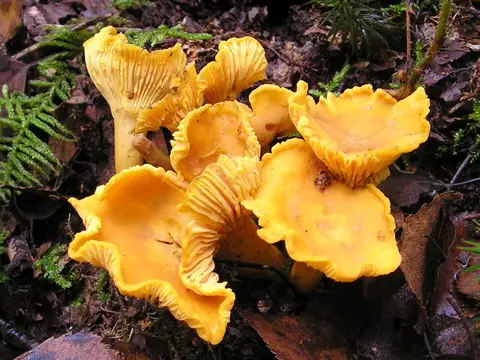
True chanterelles have blunt, wrinkled ridges, a paler, solid stem and an apricot smell.

When does False chanterelle grow?
False chanterelle is typically found Aug – Nov in conifer woods, heaths and needle litter. See other mushrooms in season:
Frequently asked questions
Is False chanterelle edible?
False chanterelle (Hygrophoropsis aurantiaca) is considered inedible. Bland and sometimes causes digestive upset. Not recommended. It is not worth eating.
What does False chanterelle look like?
Orange, darker and brownish in the centre, 2–8 cm, with an inrolled margin. Underside: thin, crowded, true gills that fork repeatedly and are deeper orange than the cap. Stem: orange-brown, thin, often hollow with age.
What are the look-alikes of False chanterelle?
The main look-alike is Chanterelle (Cantharellus cibarius). True chanterelles have blunt, wrinkled ridges, a paler, solid stem and an apricot smell.
When and where does False chanterelle grow?
False chanterelle is usually found from Aug to Nov. Habitat: conifer woods, heaths and needle litter. Range: Europe and North America.
Found something like false chanterelle?
Photograph it with Mushie for possible matches, look-alike warnings and an AI guide for follow-up questions. Results are suggestions, never a safe-to-eat verdict.
Related species
Sources and credits: written from standard field-guide references. Further reading: Wikipedia: Hygrophoropsis aurantiaca. Last updated 2026-10-22. Editorial policy.