 Mushie
Chanterelle (Cantharellus cibarius)
Edible (expert ID)
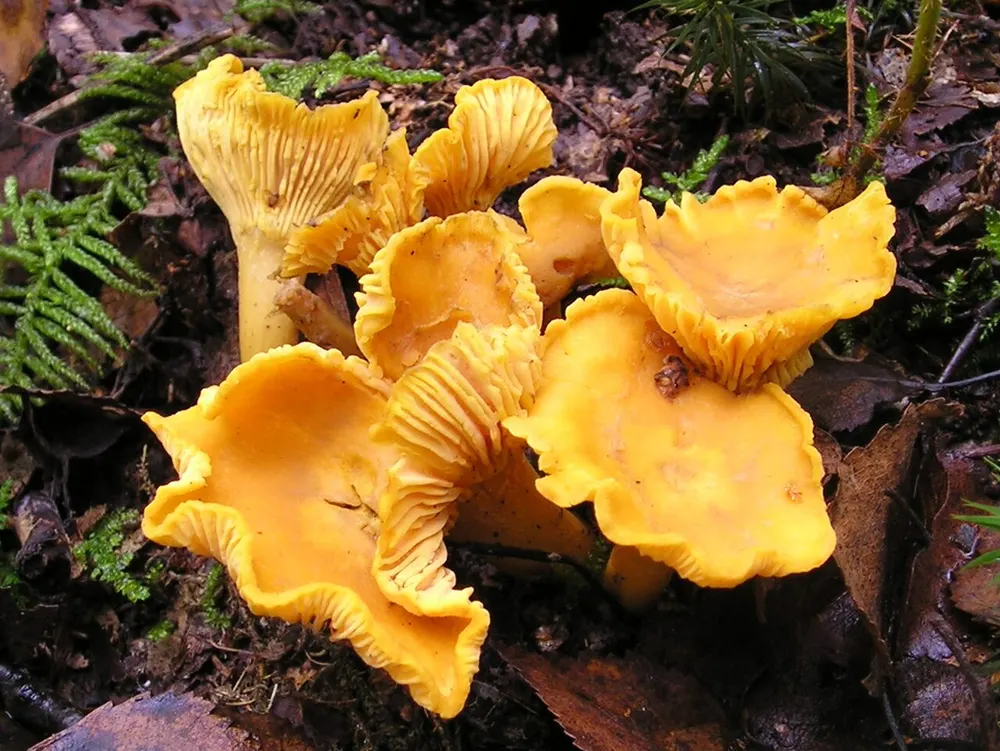
The chanterelle is a golden, funnel-shaped mushroom with blunt, forked ridges instead of true gills. Its main dangerous lookalike is the jack-o'-lantern.

| Scientific name | Cantharellus cibarius |
|---|---|
| Other names | Pfifferling · Girolle · Finferlo · Rebozuelo |
| Family | Cantharellaceae |
| Season | Jun – Nov |
| Habitat | Mossy conifer, beech and oak woods |
| Range | Europe and North America (related species elsewhere) |
| Spore print | Pale cream |
| Smell | Faintly of apricot |
How to identify Chanterelle
| Cap | Egg-yolk to pale yellow, 3–10 cm, wavy and funnel-shaped |
|---|---|
| Underside | Blunt, forked, vein-like ridges that run down the stem (false gills) |
| Stem | Solid, tapering, same colour as the cap, no ring |
| Smell | Faintly of apricot |
| Spore print | Pale cream |
Is Chanterelle edible or poisonous?
Edible (expert ID). Regarded as a choice edible when correctly identified and well cooked. Mild stomach upset can occur if eaten raw or undercooked.
Chanterelle look-alikes
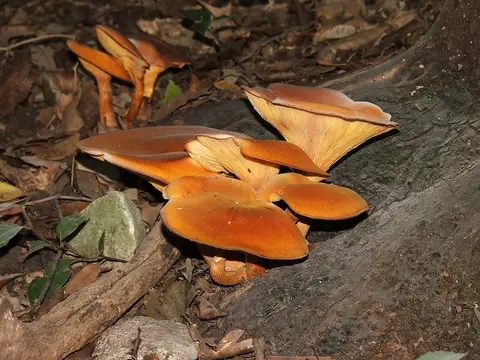
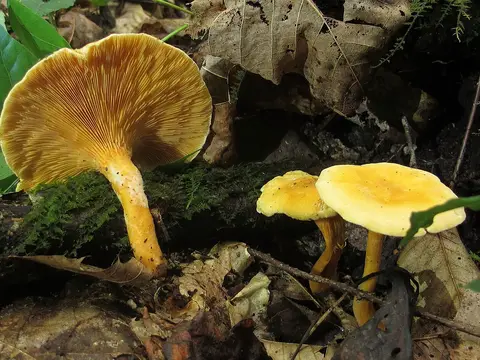
Jack-o'-lantern (poisonous) and false chanterelle (inedible) are the two main lookalikes.
- Chanterelle vs jack-o'-lantern: true gills versus blunt ridges
- Chanterelle vs false chanterelle: how to tell them apart
When does Chanterelle grow?
Chanterelle is typically found Jun – Nov in mossy conifer, beech and oak woods. See other mushrooms in season:
Frequently asked questions
Is Chanterelle edible?
Chanterelle (Cantharellus cibarius) is regarded as edible by field guides when it has been correctly identified and properly cooked. Regarded as a choice edible when correctly identified and well cooked. Mild stomach upset can occur if eaten raw or undercooked. Never eat a wild mushroom based on an app or a website. Confirm identification and edibility in person with a qualified local expert.
What does Chanterelle look like?
Egg-yolk to pale yellow, 3–10 cm, wavy and funnel-shaped. Underside: blunt, forked, vein-like ridges that run down the stem (false gills). Stem: solid, tapering, same colour as the cap, no ring.
What are the look-alikes of Chanterelle?
The main look-alikes are Jack-o'-lantern (Omphalotus olearius) and False chanterelle (Hygrophoropsis aurantiaca). Jack-o'-lantern (poisonous) and false chanterelle (inedible) are the two main lookalikes.
When and where does Chanterelle grow?
Chanterelle is usually found from Jun to Nov. Habitat: mossy conifer, beech and oak woods. Range: Europe and North America (related species elsewhere).
Found something like chanterelle?
Photograph it with Mushie for possible matches, look-alike warnings and an AI guide for follow-up questions. Results are suggestions, never a safe-to-eat verdict.
Related species
Sources and credits: written from standard field-guide references. Further reading: Wikipedia: Cantharellus cibarius. Last updated 2026-10-22. Editorial policy.