 Mushie
Jack-o'-lantern (Omphalotus olearius)
Poisonous
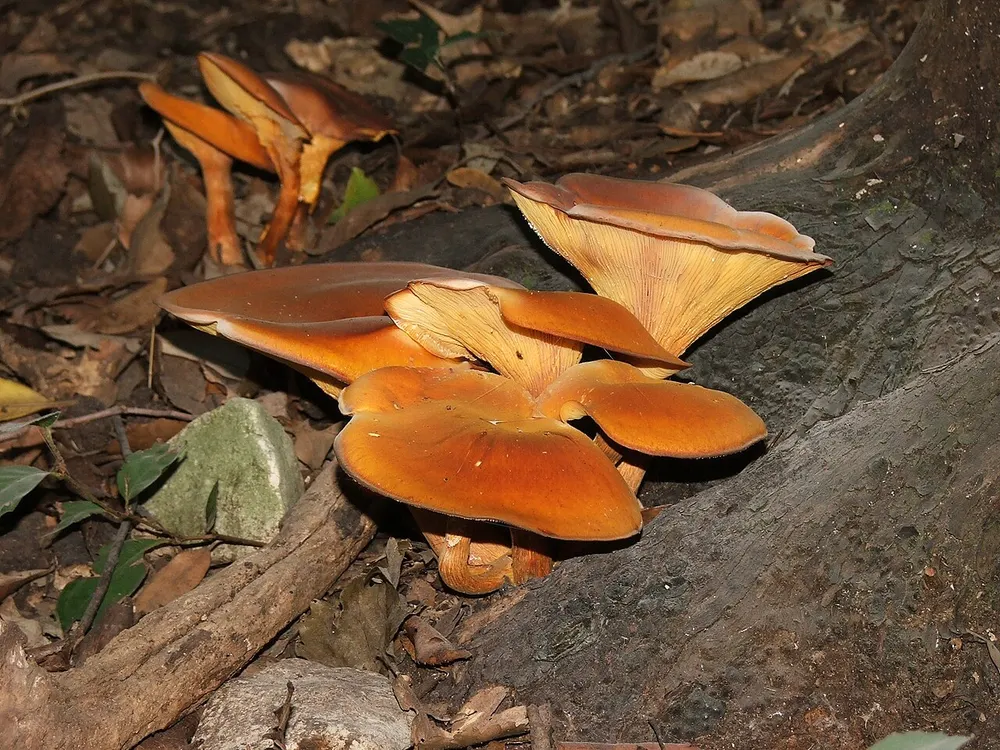
The jack-o'-lantern is a bright orange, clustered mushroom with true gills, often mistaken for chanterelles. It is poisonous.
| Scientific name | Omphalotus olearius |
|---|---|
| Other names | Leuchtender Ölbaumpilz · Omphale de l'olivier · Fungo dell'olivo |
| Family | Omphalotaceae |
| Season | Aug – Nov |
| Habitat | In dense clusters on stumps and buried roots of broadleaf trees, olive and oak |
| Range | Southern and western Europe (O. illudens in eastern North America) |
| Spore print | White to pale cream |
| Smell | Mild, slightly sweetish |
How to identify Jack-o'-lantern
| Cap | Bright orange, 5–12 cm, convex to funnel-shaped |
|---|---|
| Underside | True, thin, sharp-edged gills that run down the stem |
| Stem | Orange, tapering to a base that joins others in a tight cluster; no ring |
| Smell | Mild, slightly sweetish |
| Spore print | White to pale cream |
Is Jack-o'-lantern edible or poisonous?
Poisonous. Causes violent vomiting, cramps and diarrhoea, usually for several hours to days. Not normally fatal but a medical emergency for some people.
Jack-o'-lantern look-alikes
Chanterelles grow singly or scattered on soil with blunt forked ridges, not true gills.
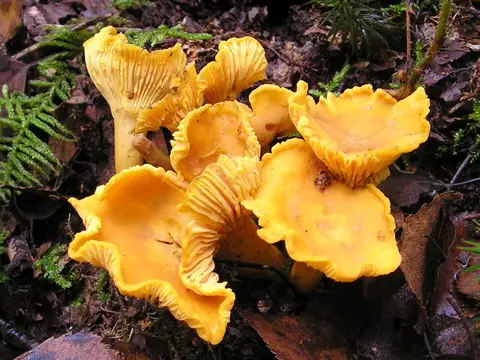
- Chanterelle vs jack-o'-lantern: true gills versus blunt ridges
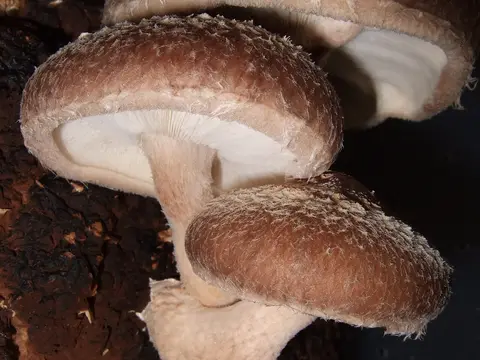
- Oyster mushroom vs jack-o'-lantern: wood-growing clusters compared
When does Jack-o'-lantern grow?
Jack-o'-lantern is typically found Aug – Nov in in dense clusters on stumps and buried roots of broadleaf trees, olive and oak. See other mushrooms in season:
Frequently asked questions
Is Jack-o'-lantern edible?
No. Jack-o'-lantern (Omphalotus olearius) is poisonous. Causes violent vomiting, cramps and diarrhoea, usually for several hours to days. Not normally fatal but a medical emergency for some people. Do not eat it.
What does Jack-o'-lantern look like?
Bright orange, 5–12 cm, convex to funnel-shaped. Underside: true, thin, sharp-edged gills that run down the stem. Stem: orange, tapering to a base that joins others in a tight cluster; no ring.
What are the look-alikes of Jack-o'-lantern?
The main look-alike is Chanterelle (Cantharellus cibarius). Chanterelles grow singly or scattered on soil with blunt forked ridges, not true gills.
When and where does Jack-o'-lantern grow?
Jack-o'-lantern is usually found from Aug to Nov. Habitat: in dense clusters on stumps and buried roots of broadleaf trees, olive and oak. Range: Southern and western Europe (O. illudens in eastern North America).
Found something like jack-o'-lantern?
Photograph it with Mushie for possible matches, look-alike warnings and an AI guide for follow-up questions. Results are suggestions, never a safe-to-eat verdict.
Related species

Sources and credits: written from standard field-guide references. Further reading: Wikipedia: Omphalotus olearius. Last updated 2026-10-22. Editorial policy.