 Mushie
Death cap (Amanita phalloides)
Deadly
The death cap is the world's deadliest mushroom. A single cap can be fatal, and cooking does not make it safe.

| Scientific name | Amanita phalloides |
|---|---|
| Other names | Grüner Knollenblätterpilz · Amanite phalloïde · Tignosa verdognola |
| Family | Amanitaceae |
| Season | Aug – Nov |
| Habitat | Under oak, beech, chestnut and other broadleaf trees |
| Range | Europe; introduced in North America, Australia and South Africa |
| Spore print | White |
| Smell | Faint, sweetish; becomes sickly with age |
How to identify Death cap
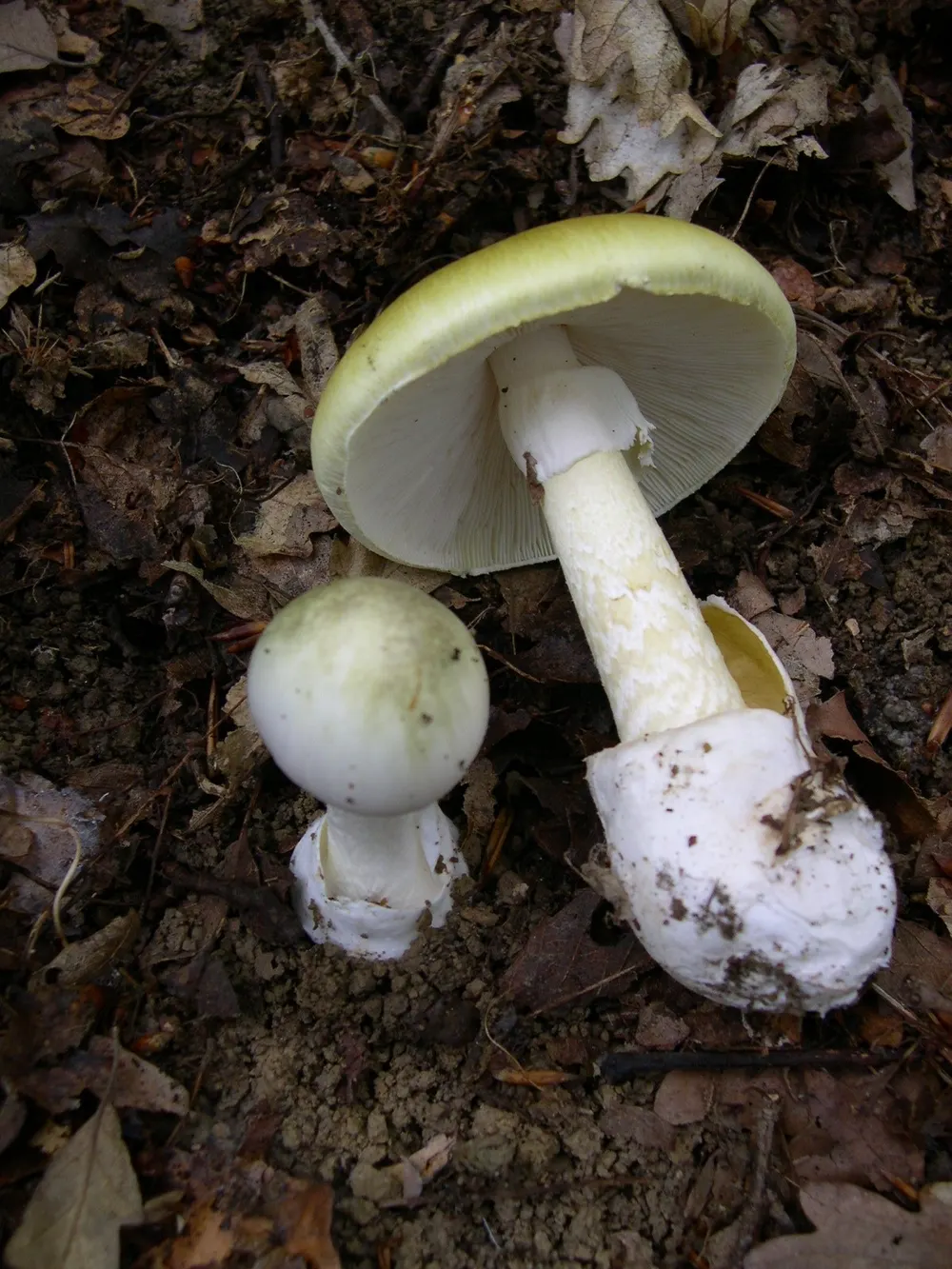
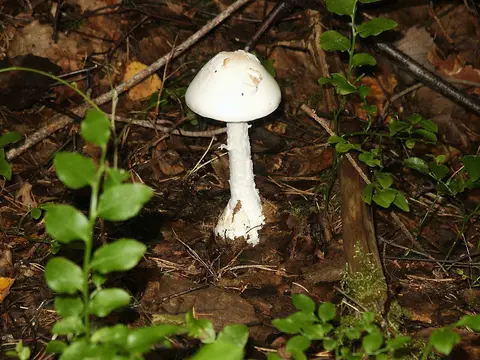
| Cap | Olive-green to yellow-green or pale, 5–15 cm, smooth, often with a faint radial fibre pattern |
|---|---|
| Underside | White gills, free from the stem |
| Stem | White, with a drooping skirt-like ring and a sac-like cup (volva) at the base, often hidden underground |
| Smell | Faint, sweetish; becomes sickly with age |
| Spore print | White |
Is Death cap edible or poisonous?
Deadly. Contains amatoxins. Symptoms can be delayed 6–24 hours, followed by liver and kidney failure. It causes the majority of fatal mushroom poisonings worldwide.
Death cap look-alikes
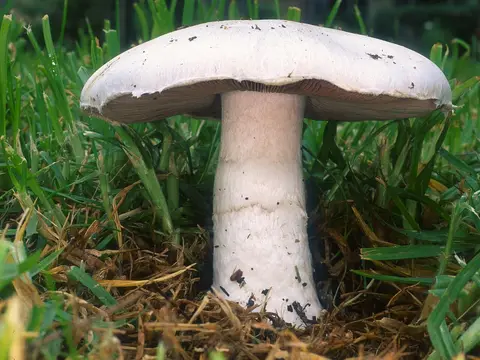
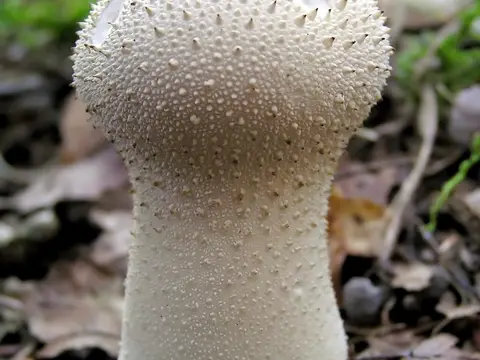
Commonly confused with edible field mushrooms, paddy straw mushrooms and young puffballs. The white gills and the sac at the base are the giveaways.
When does Death cap grow?
Death cap is typically found Aug – Nov in under oak, beech, chestnut and other broadleaf trees. See other mushrooms in season:
Frequently asked questions
Is Death cap edible?
No. Death cap (Amanita phalloides) is deadly poisonous. Contains amatoxins. Symptoms can be delayed 6–24 hours, followed by liver and kidney failure. It causes the majority of fatal mushroom poisonings worldwide. Never eat it, and call emergency services or a poison centre if you think someone has.
What does Death cap look like?
Olive-green to yellow-green or pale, 5–15 cm, smooth, often with a faint radial fibre pattern. Underside: white gills, free from the stem. Stem: white, with a drooping skirt-like ring and a sac-like cup (volva) at the base, often hidden underground.
What are the look-alikes of Death cap?
The main look-alikes are Field mushroom (Agaricus campestris) and Common puffball (Lycoperdon perlatum). Commonly confused with edible field mushrooms, paddy straw mushrooms and young puffballs. The white gills and the sac at the base are the giveaways.
When and where does Death cap grow?
Death cap is usually found from Aug to Nov. Habitat: under oak, beech, chestnut and other broadleaf trees. Range: Europe; introduced in North America, Australia and South Africa.
Found something like death cap?
Photograph it with Mushie for possible matches, look-alike warnings and an AI guide for follow-up questions. Results are suggestions, never a safe-to-eat verdict.
Related species
Sources and credits: written from standard field-guide references. Further reading: Wikipedia: Amanita phalloides. Last updated 2026-10-22. Editorial policy.