 Mushie
Fly agaric (Amanita muscaria)
Poisonous
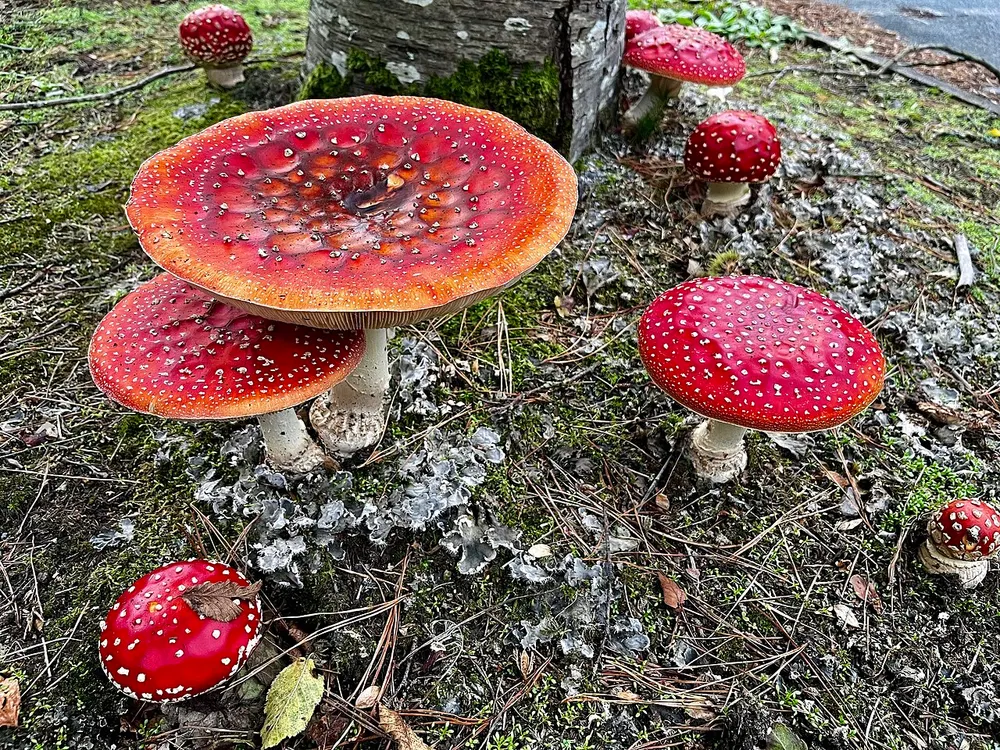
The fly agaric is the classic red toadstool with white warts. It is poisonous and should never be eaten.

| Scientific name | Amanita muscaria |
|---|---|
| Other names | Fliegenpilz · Amanite tue-mouches · Ovolo malefico |
| Family | Amanitaceae |
| Season | Aug – Nov |
| Habitat | Birch, pine and spruce woods; heaths |
| Range | Northern Hemisphere; introduced in Australia and New Zealand |
| Spore print | White |
| Smell | Mild, earthy |
How to identify Fly agaric
| Cap | Scarlet to orange-red, 8–20 cm, white warty patches that can wash off in rain |
|---|---|
| Underside | Crowded white gills, free from the stem |
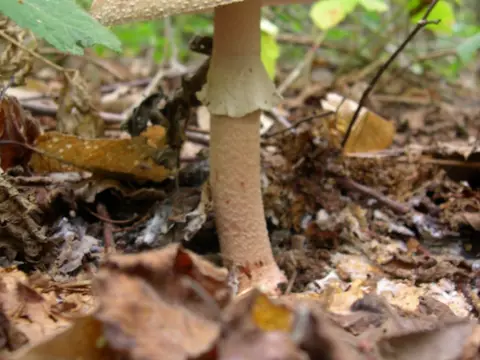
| Stem | White, with a skirt-like ring and a bulbous, scaly base |
| Smell | Mild, earthy |
| Spore print | White |
Is Fly agaric edible or poisonous?
Poisonous. Contains ibotenic acid and muscimol. Causes nausea, confusion, delirium and sometimes seizures.
Fly agaric look-alikes
In North America yellow and orange forms exist. The Mediterranean Caesar's mushroom (Amanita caesarea, edible) is orange, but has a yellow stem and ring and a white sac at its base. Never eat any Amanita unless an expert has confirmed it.
When does Fly agaric grow?
Fly agaric is typically found Aug – Nov in birch, pine and spruce woods; heaths. See other mushrooms in season:
Frequently asked questions
Is Fly agaric edible?
No. Fly agaric (Amanita muscaria) is poisonous. Contains ibotenic acid and muscimol. Causes nausea, confusion, delirium and sometimes seizures. Do not eat it.
What does Fly agaric look like?
Scarlet to orange-red, 8–20 cm, white warty patches that can wash off in rain. Underside: crowded white gills, free from the stem. Stem: white, with a skirt-like ring and a bulbous, scaly base.
What are the look-alikes of Fly agaric?
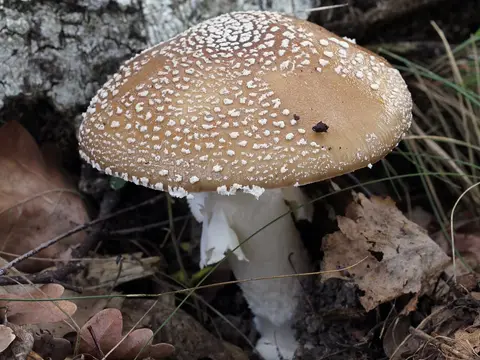
The main look-alike is Panther cap (Amanita pantherina). In North America yellow and orange forms exist. The Mediterranean Caesar's mushroom (Amanita caesarea, edible) is orange, but has a yellow stem and ring and a white sac at its base. Never eat any Amanita unless an expert has confirmed it.
When and where does Fly agaric grow?
Fly agaric is usually found from Aug to Nov. Habitat: birch, pine and spruce woods; heaths. Range: Northern Hemisphere; introduced in Australia and New Zealand.
Found something like fly agaric?
Photograph it with Mushie for possible matches, look-alike warnings and an AI guide for follow-up questions. Results are suggestions, never a safe-to-eat verdict.
Related species
Sources and credits: written from standard field-guide references. Further reading: Wikipedia: Amanita muscaria. Last updated 2026-10-22. Editorial policy.