 Mushie
Mushrooms that grow on living trees and standing trunks
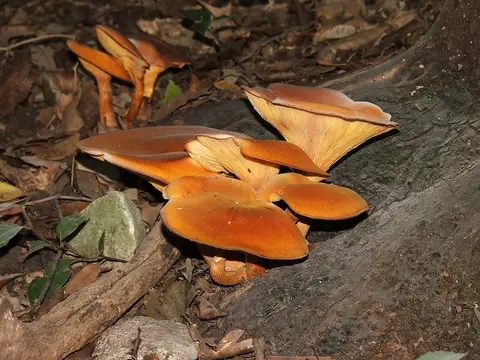
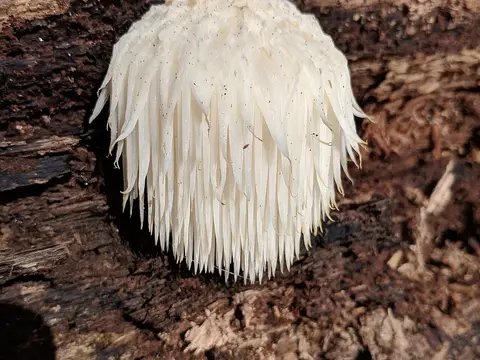
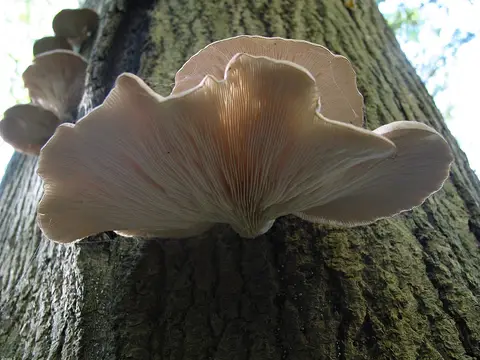
Mushrooms fruiting directly from a standing tree trunk or its root collar are either heartwood decomposers or parasites. Distinctive species like lion's mane (hanging white spines) and chicken of the woods (bright yellow-orange pore shelves) grow on standing trees, while clustered gilled mushrooms at the trunk base include both honey fungus and the poisonous jack-o'-lantern.
Poisonous in living trees & standing trunks (1)
Makes you ill. Never eat.
Edible with caution in living trees & standing trunks (3)
Only with expert ID and correct preparation.
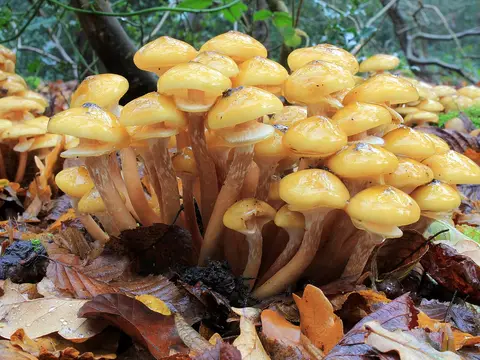
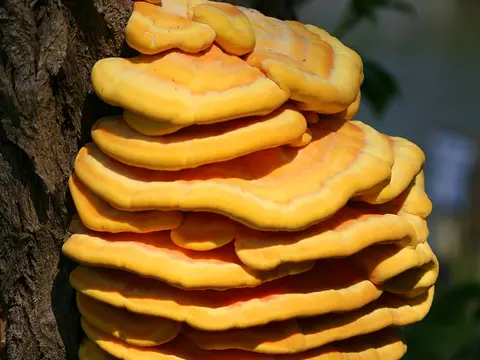
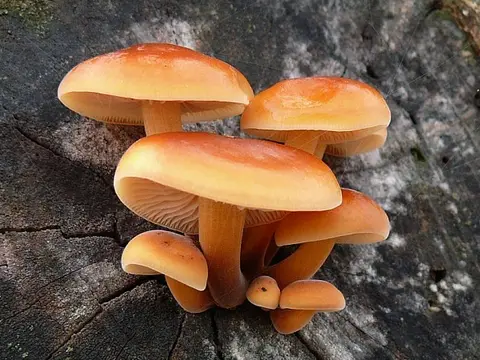
Edible (expert ID) in living trees & standing trunks (2)
Regarded as edible when expertly identified and cooked.
Frequently asked questions
Does a mushroom growing on a living tree mean the tree is dying?
Often it indicates internal heartwood decay or root infection (especially with honey fungus), though a large oak or beech can live for decades with bracket fungi.
Why does the tree species matter when identifying bracket mushrooms?
Host tree species helps confirm identification, and certain trees (such as yew) are highly toxic, while conifers and eucalyptus frequently cause stomach reactions with shelf fungi.
Found a mushroom in living trees & standing trunks?
Photograph it with Mushie for possible matches, look-alike warnings and an AI guide for follow-up questions. Results are suggestions, never a safe-to-eat verdict.