 Mushie
Mushrooms in pastures, meadows and fairy rings
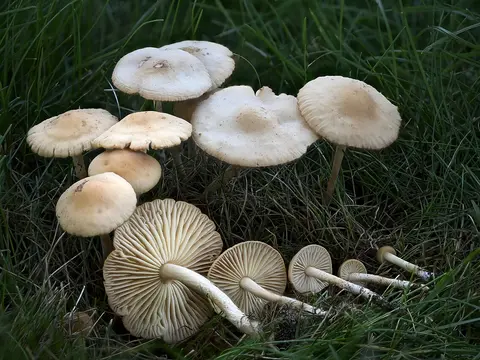
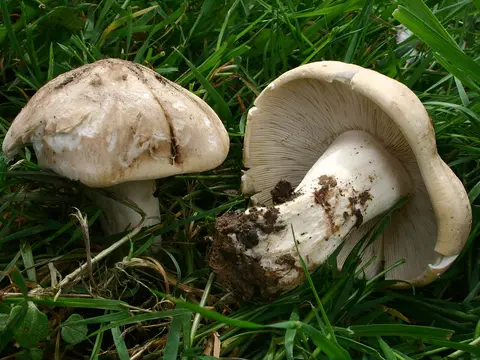
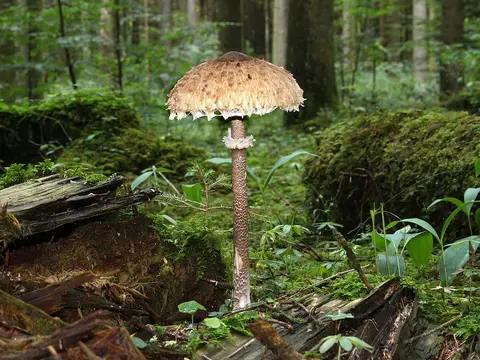
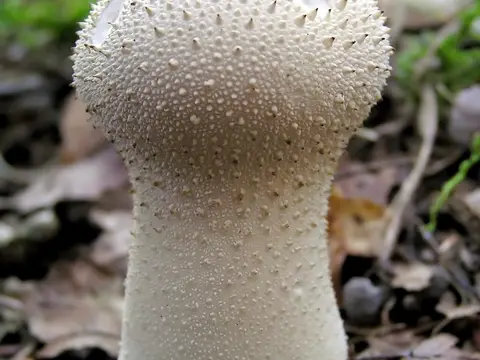
Ungrazed meadows, old pastures and grassy woodland edges support mushrooms that fruit in arcs or circular "fairy rings". While field mushrooms, parasols and St George's mushrooms grow in grass, poisonous fool's funnels, livid pinkgills and yellow stainers often share the exact same turf.
Poisonous in pastures, meadows & fairy rings (3)
Makes you ill. Never eat.
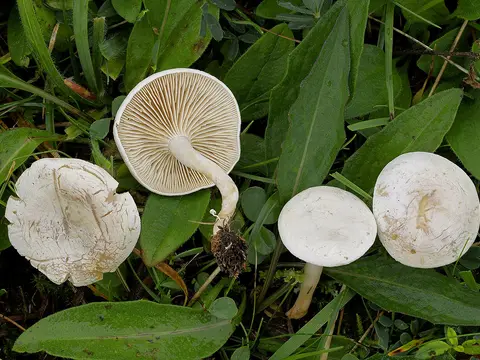
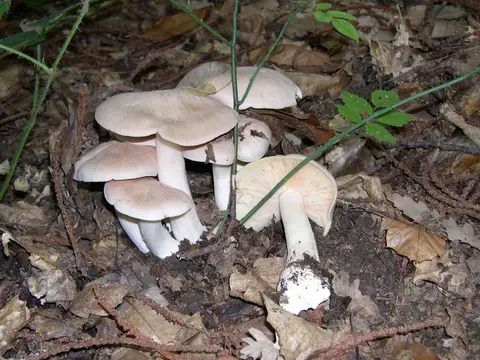
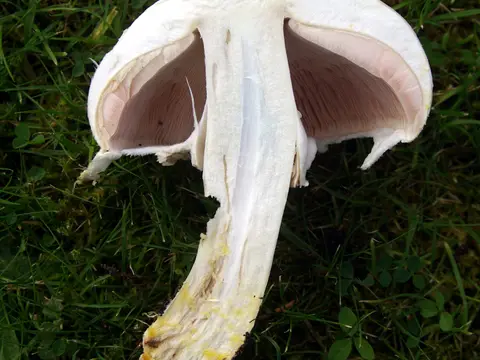
Edible with caution in pastures, meadows & fairy rings (5)
Only with expert ID and correct preparation.
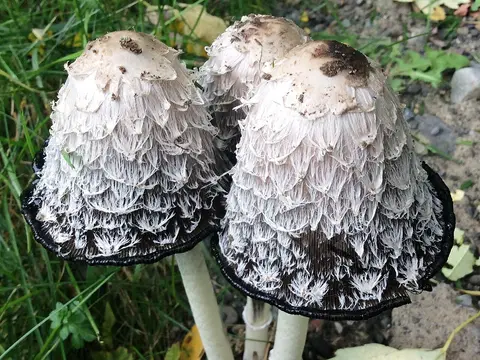
Edible (expert ID) in pastures, meadows & fairy rings (1)
Regarded as edible when expertly identified and cooked.
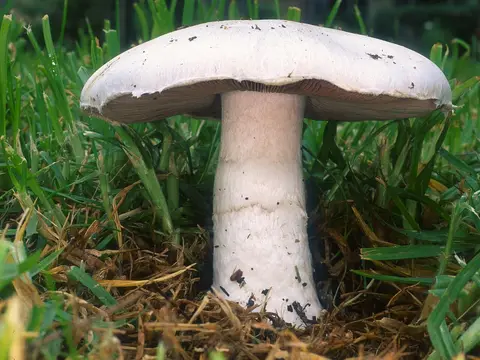
Frequently asked questions
Are fairy ring mushrooms edible?
Some ring-forming species (like Marasmius oreades) are regarded as edible when expertly identified, but poisonous species such as fool's funnel (Clitocybe rivulosa) also form fairy rings in lawns and pastures.
How do you tell a field mushroom from a yellow stainer in a pasture?
Scratch or slice the base of the stem: a yellow stainer turns bright chrome-yellow within seconds and smells of ink or disinfectant, whereas a field mushroom does not stain bright yellow.
Found a mushroom in pastures, meadows & fairy rings?
Photograph it with Mushie for possible matches, look-alike warnings and an AI guide for follow-up questions. Results are suggestions, never a safe-to-eat verdict.